Last updated: August 12, 2026
- In this remote work policy template: what include what avoid guide, that means hard rules, not cheerful blur.
- What a Remote Work Policy Template Is Supposed to Solve Not flexibility.
- What to Include in a Remote Work Policy Template This is the part that carries the weight.
- Data security and privacy Remote work changes the risk profile.
Quick Answer: A remote work policy template should cover 8 essentials: eligibility, schedule, location, equipment and expenses, security, performance, communication, and exit rules. For most companies, that means 1 policy, 2 operating modes, and 0 guesswork.
A remote work policy template has one job: spell out how work actually happens when nobody is coming into the office. In this remote work policy template: what include what avoid guide, that means hard rules, not cheerful blur. Leave it vague, and managers will improvise while employees guess; the first question about hours, gear, or performance turns into a fight. As someone who writes about workplace policy and employment operations, I know the difference between a neat-looking document and one that truly prevents confusion. Drafting one for a live workplace? Then talk to employment counsel or HR, and check guidance from the U.S. Department of Labor and your state labor agency.
What a Remote Work Policy Template Is Supposed to Solve
Not flexibility. Guesswork. That is the real target. When your team does not know who can work remotely, when they need to be online, what equipment they get, and how performance is judged, the policy has failed before it is even signed.
I would start with a sharper question: what problem is this policy supposed to prevent? For most employers, the answer is a mix of fairness problems, attendance problems, security problems, and manager inconsistency. So the template should cover rules people can follow without begging for exceptions.
At minimum, a useful template should answer these questions:
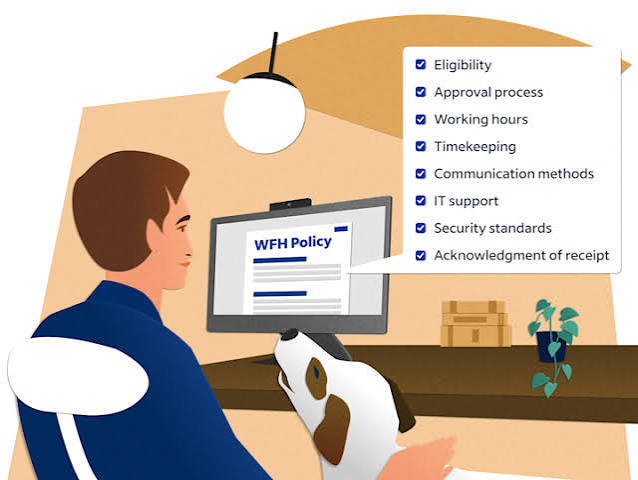
- Who is eligible for remote work
- Whether remote work is full-time, hybrid, or occasional
- What hours count as “available”
- How communication should happen
- What equipment and support the employer provides
- How time, productivity, and attendance are tracked
- What security expectations apply
- How the arrangement can be changed or ended
Miss those items, and it is not really a policy. It is a permission slip.
What to Include in a Remote Work Policy Template

This is the part that carries the weight. I would put in concrete rules, not aspirations. “We trust employees to do their best” sounds pleasant, but it leaves a blank spot where consequences should be. What happens when someone disappears for half a day or logs in from a coffee shop with company files on screen? Exactly.
A strong template should include:
-
Eligibility and approval
State which roles qualify and who signs off on remote work. If eligibility is manager-only discretion, say so. If certain jobs are excluded because of equipment, customer contact, or on-site needs, say that plainly. -
Work schedule and availability
Define core hours, response expectations, and whether employees need to be reachable by phone, chat, or email. If the policy allows flexible hours, explain how to coordinate with the team. -
Location rules
Say whether employees can work from anywhere or only from approved locations. This matters for taxes, safety, and security. Not ready for out-of-state or international work? Say no upfront. -
Equipment and expenses
List what the employer supplies and what the employee must provide. If you reimburse internet, a chair, or a monitor, explain the process. If certain costs are not reimbursed, say that too. -
Data security and privacy
Remote work changes the risk profile. Require secure Wi‑Fi, locked screens, approved devices, and rules for printing, storage, and disposal. For general privacy and security guidance, I would point readers to the U.S. National Institute of Standards and Technology and the Cybersecurity and Infrastructure Security Agency; both publish practical remote-work security guidance that can inform your policy language. Build this section with a security professional too, because the right controls depend on the tools, data, and risk level involved. -
Performance expectations
Measure outcomes, not just visible busyness. The policy should describe how performance is reviewed and what happens if work quality drops. -
Communication standards
Decide which tools are official, how quickly messages should be answered, and how meetings are handled. -
Health and safety
If employees work from home, the policy should still address ergonomic setup, incident reporting, and basic safety expectations. Depending on your jurisdiction, workplace safety obligations may still apply, so I would suggest counsel from an employment professional if you are unsure.
A generic article often stops here. Too shallow. Real policies need an exit clause too. Remote work should be reversible if the role changes, performance declines, or business needs shift.
What to Avoid in a Remote Work Policy Template
The biggest mistake I see is trying to sound supportive while dodging hard decisions. That leaves you with a document full of promises you cannot keep.
Avoid these traps:
-
Vague language
Terms like “as needed,” “reasonable access,” and “flexible availability” sound harmless, but they cause disputes. Define them. -
Open-ended promises
Do not promise permanent remote work unless you mean it. If business conditions can change the arrangement, say so. -
One-size-fits-all rules
A policy for a sales team, a finance team, and a design team may need different guardrails. If you use one template, make the exceptions explicit. -
No manager boundaries
If every manager can invent their own remote rules, employees will notice the inconsistency immediately. -
Overly punitive language
A remote policy is not a discipline policy. It should set expectations without sounding like surveillance. -
Hidden legal assumptions
Do not assume every remote employee lives in the same tax, wage, and labor rule set. Remote work across state lines or countries can trigger legal and payroll issues. That is a good place to involve employment counsel.
I also think many templates overreach on monitoring. Should you write that the company may track every mouse movement, screen activity, or keystroke, you may gain short-term visibility and lose trust fast. That trade-off is ugly. If monitoring is necessary, be explicit about what is tracked and why. If it is not necessary, leave it out.
Remote Work Policy Template: A Practical Head-to-Head Guide
Below is the comparison I would use when deciding how strict or flexible to make the policy.
| Criteria | Flexible Remote Policy | Strict Remote Policy | Winner for [condition] |
|---|---|---|---|
| Scheduling | Employee has broad control over hours | Core hours and fixed availability are required | Flexible, for knowledge work with low live-client demand |
| Location | Employees can work from approved locations with fewer limits | Work is restricted to a home office or approved site | Strict, for security-sensitive roles |
| Equipment rules | More employee choice, lighter oversight | Company-issued devices and approved setups only | Strict, for regulated or confidential work |
| Communication | Fewer required check-ins | Mandatory response windows and daily check-ins | Strict, for distributed teams that need coordination |
| Performance management | Outcome-based, less process-heavy | Outcome-based plus attendance and availability checks | Flexible, for senior independent contributors |
| Security | Baseline policies and employee judgment | Strong controls, VPNs, device management, tighter access | Strict, for handling sensitive data |
| Expense handling | Limited reimbursement | Clear reimbursement categories and approval steps | Strict, for fairness and predictability |
| Manager discretion | High local flexibility | Standardized rules across the company | Strict, for consistency across departments |
| Employee autonomy | High | Moderate | Flexible, for trusted roles with mature teams |
A flexible policy wins when the team already works well independently and the business cares more about results than visible presence. A strict policy wins when compliance, customer coverage, or data control matters more than convenience.
Flexible Remote Work Policy: Who Should Actually Use This (and Who Shouldn’t)
I would choose a flexible remote policy for teams that already manage themselves well and do not need constant live coordination. This usually fits experienced professionals, project-based work, and roles where output is easy to review without watching the clock.
The strength of a flexible policy is morale and speed. People can adjust around caregiving, appointments, deep work, and different time zones. Managers also avoid spending their day policing logins. Nice, right? That is a real advantage when the work is measurable by deliverables.
The weakness is drift. Without response times, availability windows, and meeting norms, the team can slide into delay and missed handoffs. Another risk is fairness: flexible policies can work beautifully for self-directed employees and frustrate people whose managers expect constant visibility.
I would not use a flexible policy if your business depends on live coverage, strict compliance, or fast cross-functional handoffs. I also would not use it if your managers are inconsistent. A loose policy in a disorganized culture does not create freedom; it creates confusion.
Should you use this model, be very clear about what freedom means. Freedom is not “do anything, anytime.” Freedom is “you control your day, but you still meet the standards.”
Strict Remote Work Policy: The Specific Situations Where It Wins
A strict remote policy wins when the cost of ambiguity is high. Should your team handle sensitive data, regulated records, customer confidentiality, or work that must be auditable, tighter rules are the safer choice.
The strength here is clarity. Employees know when they are expected to be online, how to secure devices, what tools to use, and what happens if they do not meet the standard. That predictability cuts down side arguments and helps managers enforce the policy without improvising.
The downside is obvious: strict policies can feel controlling. They may reduce autonomy and make remote work feel like an office with a digital leash. That can hurt retention if the rules are too rigid for the actual job. A strict policy also demands more management discipline. When leaders are inconsistent, the policy becomes a weapon instead of a guide.
I would use this model for roles with customer service windows, shared workflows, regulated information, or high security exposure. I would also use it when you are still new to remote work and need a stable baseline before loosening rules later.
Should you choose strict rules, do not confuse “strict” with “unfriendly.” The policy should be firm, not petty. There is no prize for making a good worker feel watched.
Our Verdict: Which One to Choose and Why
Choose a flexible remote policy if your team is experienced, your work is output-based, and your managers can handle judgment calls consistently. Choose a strict remote policy if you need security, compliance, scheduled coverage, or standardization across departments. Neither applies if your company still has no clear performance metrics, no manager training, and no answer to basic tax, wage, or equipment questions; fix those first.
My preference is clear: most companies should start stricter than they think, then loosen the policy once the basics are stable. That sounds less romantic than a “trust everyone” approach, but it avoids the common failure mode where a vague policy gets abused by accident and then overcorrected later.
Should your culture be mature and your work easy to measure, flexibility is the better long-term fit. If your risk profile is high or your leadership style is inconsistent, strict rules will save you from a mess.
Exception Scenarios: When the Verdict Flips
There are a few cases where I would change my recommendation.
-
Highly specialized senior staff
If a small group of senior employees does deep, independent work with little need for supervision, flexibility can beat stricter rules even in a conservative company. -
Customer-facing teams with peak-hour demand
If coverage matters more than autonomy, strict availability rules are the right call. A flexible policy can leave gaps that customers feel immediately. -
Companies with weak manager discipline
If managers already struggle to set expectations, a flexible policy may fail. Start with a strict framework until leadership maturity improves. -
Cross-border or multi-state remote teams
Should employees be spread across jurisdictions, a strict policy is often safer because location, payroll, tax, and labor issues multiply fast. This is one area where I would strongly suggest professional legal and HR review.
FAQ
What should every remote work policy template include?
At minimum: eligibility, schedule expectations, location rules, equipment and expense rules, communication standards, security requirements, performance expectations, and a clear process for changing or ending remote status.
Should remote work policies allow employees to work from anywhere?
Only if your company is ready to handle tax, payroll, legal, and security issues across different locations. If not, limit approved work locations.
Is monitoring remote employees a good idea?
Sometimes, but only when there is a real business reason. I would avoid intrusive monitoring unless the role truly requires it. Clear expectations and output-based management usually work better.
Can one template work for the whole company?
Only if the template includes role-based exceptions. A single policy can be the master document, but not every job should have the same rules.
How often should a remote work policy be reviewed?
I would review it whenever the business changes in a meaningful way: new states, new tools, new security requirements, new labor rules, or recurring manager confusion.
Bottom Line
A good remote work policy template is specific enough to prevent arguments and flexible enough to fit real work. Include the rules people need, not the promises they want to hear. Avoid vague language, hidden assumptions, and fake flexibility. To keep remote work lasting, write the policy like you expect it to be used on an ordinary Tuesday, not just approved in a meeting.