Last updated: August 12, 2026
- Key Facts – At-will employment is the default in most U.S.
- Writing or revising an at-will policy?
- A good at-will policy is short, clear, and consistent with the rest of your documents.
- If you are an employer, manager, or HR lead, the job is not to make at-will sound harsher.
Quick Answer: For most private employers, an at-will employment policy explained for employers should stay short, say that either side can end the relationship at any time for any lawful reason, and steer clear of promises that could turn into contract claims. In practice, the safer move is simple: pair the policy with manager training, a signed acknowledgment, and state-specific review.
Key Facts
– At-will employment is the default in most U.S. private workplaces.
– A clear policy is usually 2 to 4 sentences long.
– One inconsistent handbook or offer-letter promise can weaken the disclaimer.
– Managers should not promise “secure future” language or guaranteed warnings.
– State law and local counsel can change the result, so review before rollout.
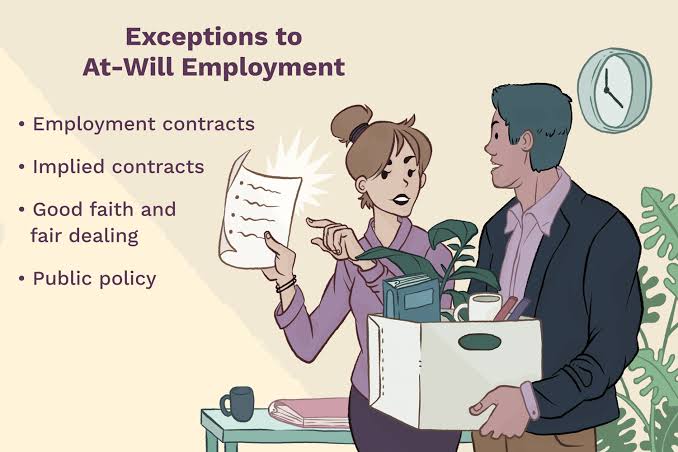
At-will employment means you can end the employment relationship at any time, for almost any lawful reason, and the employee can leave just as freely. Writing or revising an at-will policy? The real question is not “What is it?” It is “How do I use it without creating promises I do not mean to make, or legal risk I did not see coming?” This at-will employment policy explained for employers article focuses on that practical use.
I write about workplace policy and employment law because I spend a lot of time untangling the gap between what employers think at-will means and what actually holds up in a handbook, offer letter, or termination decision. Sloppy wording causes real trouble. Ugly, expensive trouble.
A good at-will policy is short, clear, and consistent with the rest of your documents. A bad one sounds broad but creates exceptions by accident. If you are an employer, manager, or HR lead, the job is not to make at-will sound harsher. The job is to make it accurate.
For legal decisions, I would still run your final language by local employment counsel, because state law can change the details. The U.S. Department of Labor and state labor agencies are also worth checking before you publish anything.
The Real Difference Between At-Will Employment and Just-Cause Employment
At-will employment usually gives private employers the most flexibility, while just-cause employment is the tighter option used when a contract or rule requires a reason and process.
Simple in theory. Messy in practice. Under at-will employment, you do not need to prove a fixed reason before ending employment, so long as the reason is lawful. Under just-cause arrangements, you usually need to show a legitimate basis, follow a process, and sometimes document warnings before termination.
That flexibility is the main strength of at-will. It lets you respond to poor performance, attendance problems, misconduct, restructuring, or a bad fit without building a courtroom-style file for every decision. The downside is blunt: at-will does not protect you from claims if your reasons look discriminatory, retaliatory, or inconsistent. It is not a free pass.
Just-cause systems reduce ambiguity for employees. They also slow down management decisions and can force you into progressive discipline even when a situation is urgent. I would choose just-cause only when the arrangement is required or strategically worth the trade-off. Otherwise, it can feel like putting brass knuckles on a rubber band.
For employers drafting policy, the real decision is usually not “at-will or not.” It is whether your handbook, offer letters, and supervisor scripts all say the same thing. One sloppy promise about “job security” can undercut an at-will disclaimer fast.
At-Will Employment Policy: Who Should Actually Use This and Who Shouldn’t
At-will employment policy explained for employers is usually the right default for most private employers in the United States, especially if you need operational flexibility and a straightforward handbook. It is especially useful for smaller teams, fast-changing businesses, seasonal operations, and companies that want one standard rule across roles.
The biggest strength is administrative simplicity. You do not need a detailed legal file to end every relationship, and you are less likely to trap yourself with rigid discipline language that does not fit the situation. It also gives managers room to act when a role is clearly not working. That matters when performance issues are obvious but hard to reduce to one clean policy violation.
But “simple” can become “careless.” If your policy is too broad, managers may think they can terminate for any reason at all. They cannot. They still cannot terminate for unlawful reasons, and they still need to follow anti-discrimination, retaliation, wage-and-hour, leave, and contract rules. The consequence of overconfidence is often a claim that the employer ignored its own handbook or treated people differently. When in doubt, ask employment counsel before acting.
At-will policy is not for employers who want to imply long-term job security, promise discipline before termination in every case, or negotiate individualized employment terms without legal review. It is also a poor fit if you operate in a state or industry where local rules narrow at-will flexibility.
The exact user profile that fits: a private employer that wants a clear, lawful baseline, can train managers not to overpromise, and is willing to pair the policy with careful documentation.
When a Just-Cause Policy Wins for Employers
Just-cause wins when predictability matters more than speed. That usually means a unionized environment, a government role, or a business where you have already agreed to more protected employment terms in writing.
Its main strength is trust. Employees know what happens before discipline escalates, and managers know they must build a record. That can reduce arbitrary terminations and make decisions easier to defend when challenged. In workplaces with many supervisors, just-cause rules can also create consistency because every termination has to pass through a clearer process.
The cost is real. A just-cause system can slow urgent action. It can also create false comfort if managers assume “we followed the steps, so we are safe.” If the underlying reason is discriminatory, retaliatory, or unsupported, the process does not save you. And if your policy is too rigid, it can keep a bad employee longer than the business can reasonably absorb.
I would recommend just-cause only when you already need that structure, not as a general “fairness” upgrade. Many employers think a stricter policy will prevent disputes. Often it does the opposite by creating more arguments over whether each step was followed perfectly.
The specific situation where it wins: regulated environments, union settings, or organizations that want discipline to be reviewable and gradual rather than flexible and manager-led.
The Honest Side-by-Side
| Criteria | At-Will Employment | Just-Cause Employment | Winner for [condition] |
|---|---|---|---|
| Termination flexibility | High, if the reason is lawful | Limited by proof and process | At-will for fast-changing businesses |
| Manager simplicity | Easier to administer | Requires more training and documentation | At-will for smaller HR teams |
| Employee predictability | Lower; can feel abrupt | Higher; discipline steps are clearer | Just-cause for highly structured workplaces |
| Risk of overpromising | Higher if policy language is sloppy | Higher if process is not followed exactly | At-will if policy is carefully drafted |
| Speed of action on poor performance | Usually faster | Usually slower | At-will for urgent personnel decisions |
| Best fit for union or public-sector settings | Often not the controlling model | Usually the correct framework | Just-cause for covered employees |
| Protection against claims | Still depends on lawful reasons and consistency | Still depends on lawful reasons and consistency | Neither; both require legal compliance |
| Need for documentation | Helpful, but not always mandatory before action | Usually essential | At-will for lighter administrative load |
| Fit with a startup or scaling company | Usually better | Often too rigid | At-will for growth-stage employers |
My view is straightforward: at-will is the better default for most private employers, and just-cause is the better choice only when a contract, statute, or business model demands more structure. The table above is not about ideology. It is about what changes your actual day-to-day decisions.
The Honest Side of an At-Will Employment Policy
An at-will policy is useful only if it is written as a disclaimer, not as a boast. I would keep it short and plain. It should say that employment is at-will, that either party may end the relationship at any time, and that nothing in the handbook changes that unless a specific written agreement signed by the proper officer says otherwise.
The strength of a well-written at-will policy is that it reduces the risk of accidental contract language. For example, managers often say things like “you have a secure future here,” “as long as you do your job, you will be fine,” or “we only terminate after multiple warnings.” Those phrases can create expectations that fight the policy, so train supervisors and, if needed, consult counsel before using them. Clear language gives you a cleaner defense when someone later claims a promise was made.
The weakness is that a policy is only one piece of the puzzle. If your handbook also promises progressive discipline in every case, if your offer letter suggests guaranteed employment, or if supervisors speak casually about job security, the at-will language may not save you. That is the consequence of inconsistency: you invite a dispute over which document controls.
At-will policy works best for employers who want one baseline rule across most jobs and who can train managers to avoid contradictory statements. It is not for employers who want broad flexibility in practice but strong employee loyalty in messaging; those two goals clash if you are careless.
If you are drafting the policy now, I would also compare your language against guidance from the U.S. Department of Labor and your state labor agency, and consult employment counsel before rollout. That is especially true if you operate in multiple states.
Our Verdict: Which One to Choose and Why
Choose at-will if you are a private employer that needs flexibility, wants a simple handbook rule, and can train managers not to make side promises. Choose just-cause if your workforce is covered by a contract, public rule, or other requirement that already demands cause and process. Neither if you are using the policy to hide unlawful terminations, because no wording can fix discrimination, retaliation, or contract violations.
My recommendation is clear: most employers should use at-will employment policy language, but only as part of a disciplined document set. The policy should be short, direct, and consistent with offer letters, discipline policies, and supervisor training. If you need more protection for employees, build it through fair procedures, not by pretending at-will is something it is not.
A good at-will policy gives you room to manage. A bad one creates false certainty. That is the difference that matters.
When to Reconsider This Choice Entirely
There are a few situations where the verdict flips or the question changes.
First, if you are dealing with unionized employees, a collective bargaining agreement may override the at-will framework. In that case, draft to the contract, not around it.
Second, if you have employees in states with stronger worker protections, your policy must reflect those limits. At-will still exists in many places, but local rules can narrow how and when you terminate. Do not assume a national template fits everywhere.
Third, if your company uses offer letters, retention promises, commission plans, or bonus agreements that imply continued employment, you may need a more careful legal review before you rely on a standard at-will statement.
Fourth, if your managers are prone to improvising, the bigger problem may not be the policy at all. It may be training. A perfect handbook does not fix a supervisor who promises what the company will not deliver.
Sources to Check Before You Publish or Roll Out the Policy
I would use these as starting points, then confirm state-specific guidance:
- U.S. Department of Labor: https://www.dol.gov/
- National Conference of State Legislatures, employment law resources: https://www.ncsl.org/
- Society for Human Resource Management, employment-at-will guidance: https://www.shrm.org/
- Cornell Legal Information Institute, employment-at-will overview: https://www.law.cornell.edu/wex/employment_at_will
FAQ
Is every employee in an at-will state automatically at-will?
No. A state’s default rule can still be changed by contract, handbook language, public policy limits, union rules, or specific statutes.
Can I fire an at-will employee for any reason?
Not for an unlawful reason. At-will does not allow discrimination, retaliation, interference with protected leave, or breach of contract.
Should my handbook say “employment is at-will” in more than one place?
Usually one clear, consistent statement is enough. Repeating it is less useful than making sure no other document contradicts it.
Do I need employees to sign the at-will policy?
A signed acknowledgment is helpful because it shows the employee received the policy. It does not replace careful drafting or legal compliance.
Can a manager override the at-will policy with a promise?
Sometimes a manager’s promise creates risk, especially if it sounds like guaranteed employment. That is why I would train supervisors to avoid saying anything that sounds like a contract unless HR or counsel has approved it.