Last updated: August 12, 2026
- At 41 hours, payroll can flip from routine to risky.
- Nonexempt employees are entitled to overtime pay when they work more than the applicable threshold, usually 40 hours in a workweek under federal law.
- Problem sign: if deductions are made for partial-day absences or productivity, exemption status may be at risk.
- Test the duties against a recognized exemption category.
At 41 hours, payroll can flip from routine to risky. Exempt vs nonexempt employees comes down to one practical question: does the employee qualify for overtime pay, or must you pay overtime whenever they work more than 40 hours in a workweek? Get that wrong, and the fallout is rarely pretty — wage claims, back pay, penalties, and corrected time records pile up fast. For employers, the exempt vs nonexempt employees difference is a payroll and compliance issue, not just a title issue.
I’m writing for employers, managers, and HR teams who need a working answer, not a law school lecture. This applies if you are setting up a new role, auditing current titles, or fixing a pay practice that has drifted over time. Not a DIY job, though, if you are dealing with a borderline white-collar exemption, multiple states, commissioned pay, fluctuating schedules, or a role that mixes office work with manual tasks. In those cases, get advice from a qualified employment attorney or HR/payroll professional familiar with your state rules.
Federal rules start with the U.S. Department of Labor: https://www.dol.gov/agencies/whd/fact-sheets. State wage and hour rules can be stricter, so federal compliance alone is not enough.
Who This Applies To — and Who Should See a Professional Instead
Private employers, nonprofits, and many public-sector employers all run into this issue. It comes up most often when you are deciding whether a salaried employee is truly exempt, or whether an hourly employee should stay nonexempt.
The basic distinction is simple:
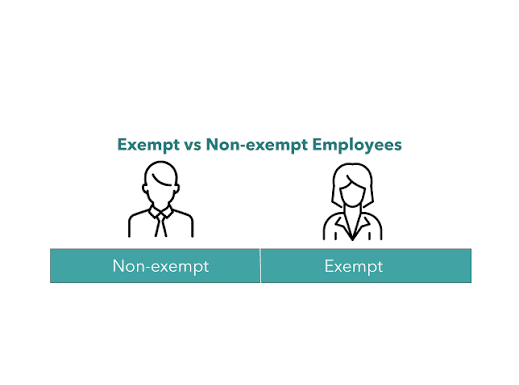
- Exempt employee: excluded from overtime rules if they meet both the salary basis test and the duties test under the applicable law.
- Nonexempt employee: entitled to overtime, usually at 1.5 times the regular rate for hours over 40 in a workweek under federal law, unless a different rule applies.
Simple on paper. Messy in real life. A title like “manager,” “coordinator,” or “specialist” does not decide the issue. Actual job duties do. And a paycheck that says “salary” does not decide it either.
I would stop and get professional help if any of these are true:
- The employee supervises people part of the time but also spends a lot of time doing the same work as the team.
- The employee earns a salary but also gets commissions, bonuses, or overtime-like adjustments.
- The role involves outside sales, computer work, creative work, or highly specialized professional work.
- The employee works in more than one state.
- The employee is paid partly in cash, shift differentials, tips, or piece rates.
- The employee was misclassified before and you are trying to fix it.
A careful review now is cheaper than a wage claim later. Time is the trade-off: classification review takes more than a quick title check, but guessing can snowball into a much bigger bill.
The Step-by-Step Process for Exempt vs Nonexempt Employees: Differences Employers Need to Know (Done Correctly)
Don’t start with the title. Start with the facts. I would work through the process in order and document each step.
- Identify the workweek and pay structure. Set the exact seven-day workweek you use for overtime calculations and note whether the person is salaried, hourly, piece-rate, or commission-based. Verify: the workweek is fixed and consistent. Problem sign: if managers change the workweek to avoid overtime, that is a compliance red flag.
- List the actual duties, not the job title. Write down what the employee does during a normal week, including the percentage of time spent on each category of work. Check: the duties match the real job, not the org chart. Problem sign: if the written description and day-to-day work diverge, the classification may fail.
- Check whether the salary basis test applies. For many white-collar exemptions, the employee must receive a predetermined salary that is not reduced because of variations in quantity or quality of work. Confirm: pay is not docked for ordinary shortfalls in output. Problem sign: if deductions are made for partial-day absences or productivity, exemption status may be at risk.
- Test the duties against a recognized exemption category. Common federal categories include executive, administrative, professional, outside sales, and certain computer employees. Verify: the role fits the category’s core legal elements. Problem sign: if the employee mostly performs routine production or customer service work, the exemption may not fit.
- Calculate the regular rate for nonexempt staff correctly. The regular rate usually includes nondiscretionary bonuses, commissions, and certain shift premiums, then overtime is calculated from that rate. Make sure: every pay component that must be included is included. Problem sign: if bonus pay is ignored, overtime is often understated.
- Review recordkeeping methods. Nonexempt employees need accurate time records for all hours worked, including off-the-clock work if it occurs. Verify: time is tracked daily, not reconstructed from memory. Problem sign: if supervisors “adjust” time entries without employee review, your records may not hold up.
- Decide on classification and communicate it in writing. Put the classification, pay method, and overtime rules in a clear policy or offer letter. Confirm: managers understand they cannot promise “comp time” instead of overtime unless the law allows it. Problem sign: if supervisors improvise pay promises, the policy will be ignored in practice.
- Audit after any job change. Recheck classification whenever duties, schedule, supervision, or pay structure changes. Verify: the review happens before the change takes effect when possible. Problem sign: a promotion in name only, with the same old work, does not justify a new exemption.
The biggest difference in practice is this: exempt staff are generally paid for the job, while nonexempt staff are paid for the time worked. Clean concept. Not so clean at 7:30 p.m., when someone is answering calls after hours, working through lunch, or doing “just a few emails” at night. Those small chunks add up fast for nonexempt employees.
Federal guidance on overtime and white-collar exemptions starts here: https://www.dol.gov/agencies/whd/fact-sheets/17a-overtime and https://www.dol.gov/agencies/whd/fact-sheets/17e-overtime.
Critical Checkpoints: What to Verify Before Moving Forward
Before you classify anyone, I would check five things.
First, verify the exemption category by duties. The executive exemption usually requires supervision as a primary duty and authority over other employees or meaningful input into hiring and firing. Administrative work means office or nonmanual work tied to business operations or management, not just doing the business’s front-line output. Professional work usually requires advanced knowledge in a field of science or learning, or creative work requiring invention or imagination.
Second, verify the salary level and salary basis under the law that applies. Federal rules can change, and some states set higher thresholds or different tests. Do not assume last year’s threshold still applies.
Third, verify any state-specific rule. California, New York, and other states often have tighter requirements than federal law. If the employee works remotely from another state, that state may control.
Fourth, verify how bonus and commission pay interact with overtime. Some arrangements are fine only if calculated correctly. A common mistake is assuming a bonus is “extra” and therefore irrelevant. That is often wrong.
Fifth, verify your records. For nonexempt staff, timekeeping should capture all hours worked, including remote work, training time, travel time that counts, and any work done outside the schedule if it is suffered or permitted.
One more thing: the safest classification is not always the easiest one for payroll. Simple is nice; accurate is better. If the role sits close to the line, choosing exempt just to keep things tidy is asking for trouble.
Warning Signs: When to Stop and Get Help

The employee mainly does hourly-style production work: The person may have a salaried paycheck but still be nonexempt if the real job is production, fulfillment, support, or service — Stop and review the duties test before treating the role as exempt, and consult a qualified employment attorney or HR/payroll professional if the facts are close. Source: U.S. Department of Labor fact sheets https://www.dol.gov/agencies/whd/fact-sheets/17a-overtime.
Payroll deductions are made for partial-day absences: That can conflict with salary basis rules for exempt staff — Correct the pay practice and have counsel review whether the exemption survives, because salary-basis rules are fact-specific. Source: U.S. Department of Labor fact sheets https://www.dol.gov/agencies/whd/fact-sheets.
The job includes a lot of mixed duties: The employee manages people part of the day and performs the same tasks as the team the rest of the day — Determine which duty is primary, because the exemption may fail if management is not the main role, and consult a professional if the split is hard to assess. Source: U.S. Department of Labor fact sheets https://www.dol.gov/agencies/whd/fact-sheets/17a-overtime.
The employee works across state lines: One state may require higher pay thresholds or stricter overtime rules — Apply the law most favorable to the employee where required, and get state-specific advice.
There are off-the-clock work habits: Answering texts, checking email, or working through meal periods can create unpaid time — Stop the habit, train supervisors, and fix timekeeping immediately.
The company plans to “fix” misclassification by relabeling the role only: Changing a title does not change legal status — Rebuild the job, pay method, and records before relying on a new classification.
A misclassification problem is rarely just one bad paycheck. It often spreads across multiple pay periods, bonus cycles, and employees in the same role. That is why I would treat a warning sign as a stop sign, not a nuisance, and consult a qualified employment attorney or HR/payroll professional before acting on a close call. Source: U.S. Department of Labor fact sheets https://www.dol.gov/agencies/whd/fact-sheets.
The Most Common Mistakes (and Their Real Consequences)
-
Using job titles instead of job duties.
Consequence: exempt employees who are really nonexempt can trigger overtime back pay and payroll corrections.
Correct alternative: document actual duties and classify from the duties test first. -
Assuming every salaried employee is exempt.
Consequence: salary alone does not erase overtime rights, so the employer may owe unpaid overtime.
Correct alternative: test salary basis and exemption category together. -
Ignoring state law.
Consequence: a role that passes federal standards may still fail under state rules.
Correct alternative: check the law where the employee actually works. -
Failing to track nonexempt hours accurately.
Consequence: the employer loses the records it needs to defend a wage claim and may have to accept the employee’s estimates.
Correct alternative: use daily time entry and supervisor review. -
Leaving managers out of the process.
Consequence: supervisors tell employees to “finish from home” or “just don’t clock it,” which creates off-the-clock liability.
Correct alternative: train managers on overtime approval and time reporting. -
Treating bonuses and commissions as separate from overtime.
Consequence: the regular rate is understated and overtime is underpaid, so the payroll error can grow over several pay periods.
Correct alternative: review each pay component before payroll runs, and consult a qualified employment attorney or a lawyer familiar with HR/payroll if the commission plan is unusual.
I would call these process errors, not just paperwork errors. They are operational mistakes that show up as legal exposure later.
Edge Cases and Modified Approaches
Some roles need a modified approach because the standard exempt/nonexempt test does not fit neatly.
Inside sales with some outside visits: The outside sales exemption is narrow. If most sales work happens from the office, the employee may be nonexempt even if they occasionally meet clients in person.
Highly paid employees: Higher pay can support an exemption under some rules, but it does not automatically control the outcome. Duties still matter.
Computer employees: Technical titles can mislead. Routine help-desk work is not the same as systems analysis, programming, or similar exempt computer duties.
Seasonal or intermittent work: A person may be exempt during one part of the year and nonexempt during another if duties truly change. That requires a fresh review, not a guess.
Remote employees: Home-based work makes off-the-clock work easier to miss. I would use stricter timekeeping and written expectations for response times.
Nonprofit and public-sector roles: Mission-driven work does not change wage law. A “program manager” can still be nonexempt if the duties do not satisfy an exemption.
The modified approach is usually the same in principle: narrow the analysis to the actual work, then add state-law review and tight documentation. The more unusual the pay plan, the less sense blanket assumptions make.
What to Expect: Realistic Timeline and Outcomes
If you are classifying one straightforward role, I would expect a same-day or same-week review if the job description is accurate and the duties are simple. If the role is mixed, remote, or spread across states, expect a longer review because you need better facts.
If you are auditing an existing workforce, the work takes longer. You have to collect job descriptions, interview managers, check payroll, and compare actual duties to the exemption test. The outcome may be one of three things:
- the employee stays exempt;
- the employee is reclassified as nonexempt going forward;
- the employer discovers past errors and needs a correction plan.
The hardest outcome is the last one, but it is still better than pretending the issue does not exist. A clean correction plan usually includes revising job duties, updating payroll rules, fixing timekeeping, and deciding whether back pay is owed under advice from counsel.
I would not expect a perfect answer from a title review alone. The right answer usually comes from the facts, not the org chart. For practical next steps, review your payroll setup and overtime policy before you change any title.
FAQ
What is the main difference between exempt and nonexempt employees?
Exempt employees are generally not entitled to overtime if they meet the legal tests. Nonexempt employees are entitled to overtime pay when they work more than the applicable threshold, usually 40 hours in a workweek under federal law.
Can I classify someone as exempt just because they are salaried?
No. A salary alone does not make someone exempt. You still have to check the duties test and any salary-basis requirements.